
Boat Lift Installation & Repair — Lake Travis and Lake Austin
The short answer
A boat lift should fit your boat, dock and lake conditions. ATX Lakescapes installs and repairs lifts across the Highland Lakes, with equipment selection, site work, approvals and pricing defined for the project.
Planning a boat lift in Central Texas
A boat lift is part of your dock, your shoreline and the way you use the water. We help you work through the boat, the site and the installation scope before you choose a system.
Start with your boat's make, model and loaded weight, plus the dock's location and a few photos. If you already have a lift, include its make and model and describe the problem. Those details make the first conversation more useful.
Explore capacity with the boat lift calculator. It is an early planning aid; the selected lift and installation still need to meet the manufacturer's requirements and the conditions at your site.
We discuss new installations and repairs on Lake Travis, Lake Austin, Lake LBJ, Lake Marble Falls and Lake Buchanan. The boat, water depth, dock layout and access guide the proposed scope.
Fitted to the lakefront
Fitted to the place.
Never pulled from a template.
Two completed lakefront projects, each fitted to its place. Open a project to inspect the full photograph and its scope.

Pixie Cove
Dual jet ski platform, custom-fitted boat-lift platform, and custom rail guides.
Read Pixie Cove project
Bruton Springs
Complete deck remodel with two custom-fitted hydraulic lift platforms and two custom protective screens.
Read Bruton Springs projectSelect Pixie Cove or Bruton Springs to inspect the full photograph and its published project scope.
Two completed properties. Two different scopes of work.
On the water
A closer look at our work
Project details from our work on the water.
Boat lifts
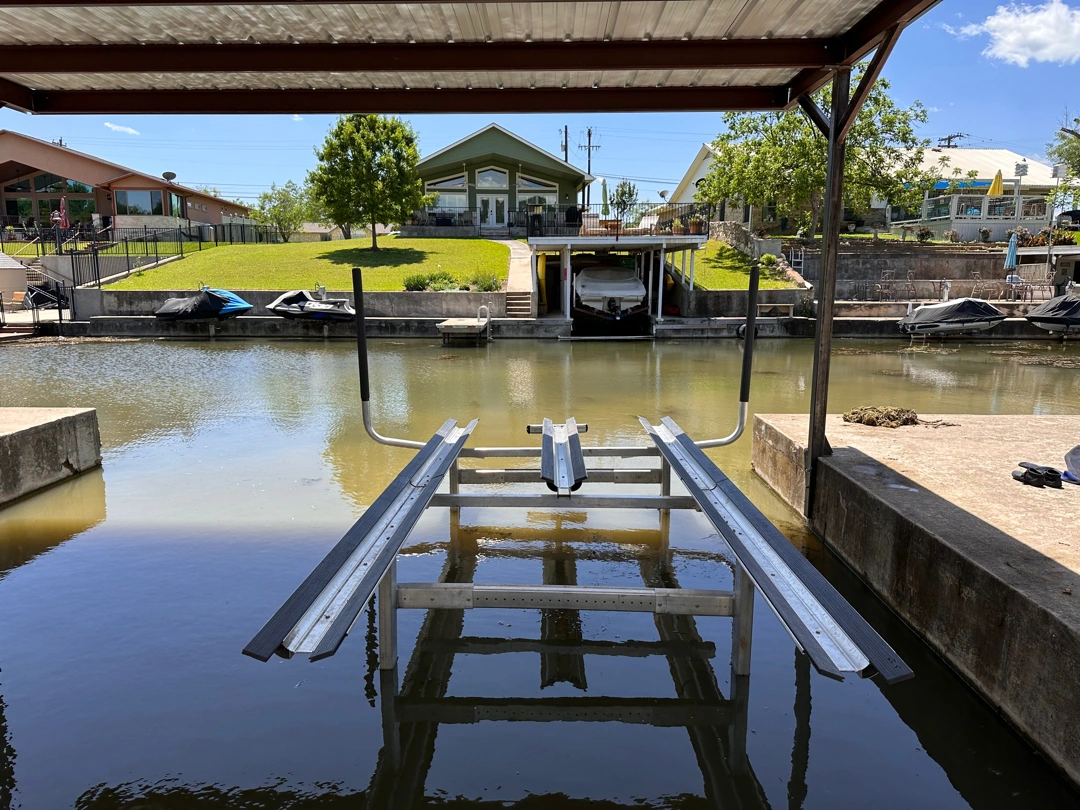
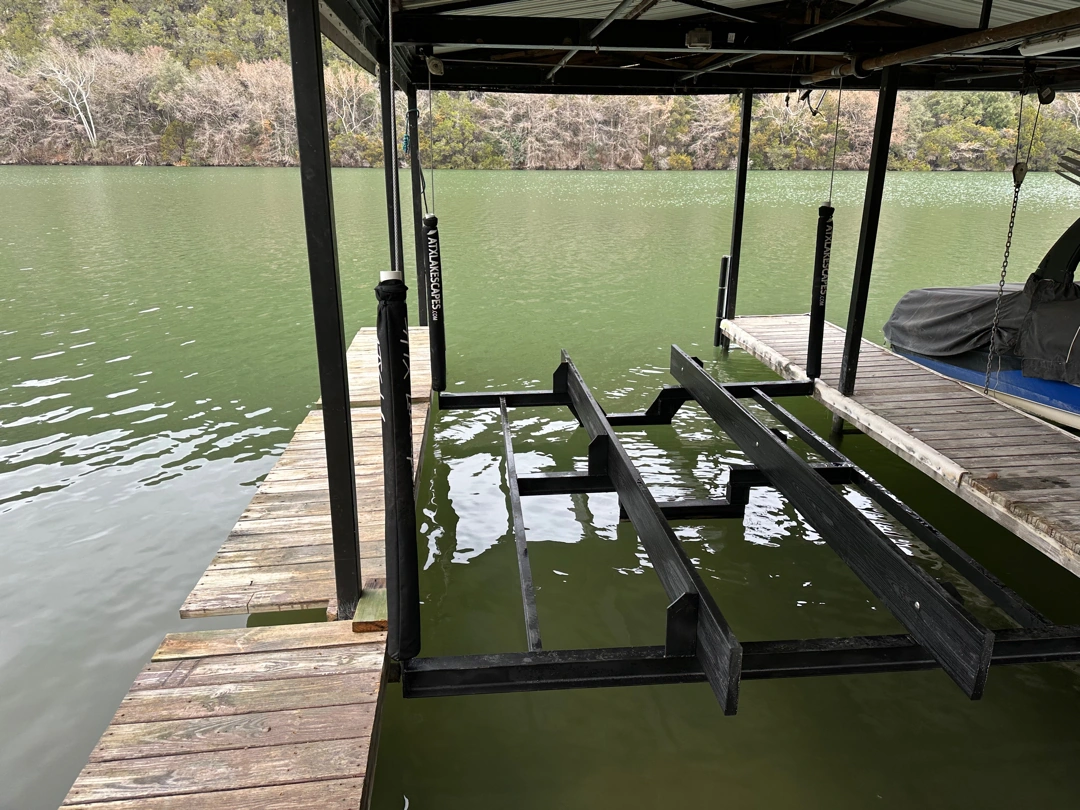
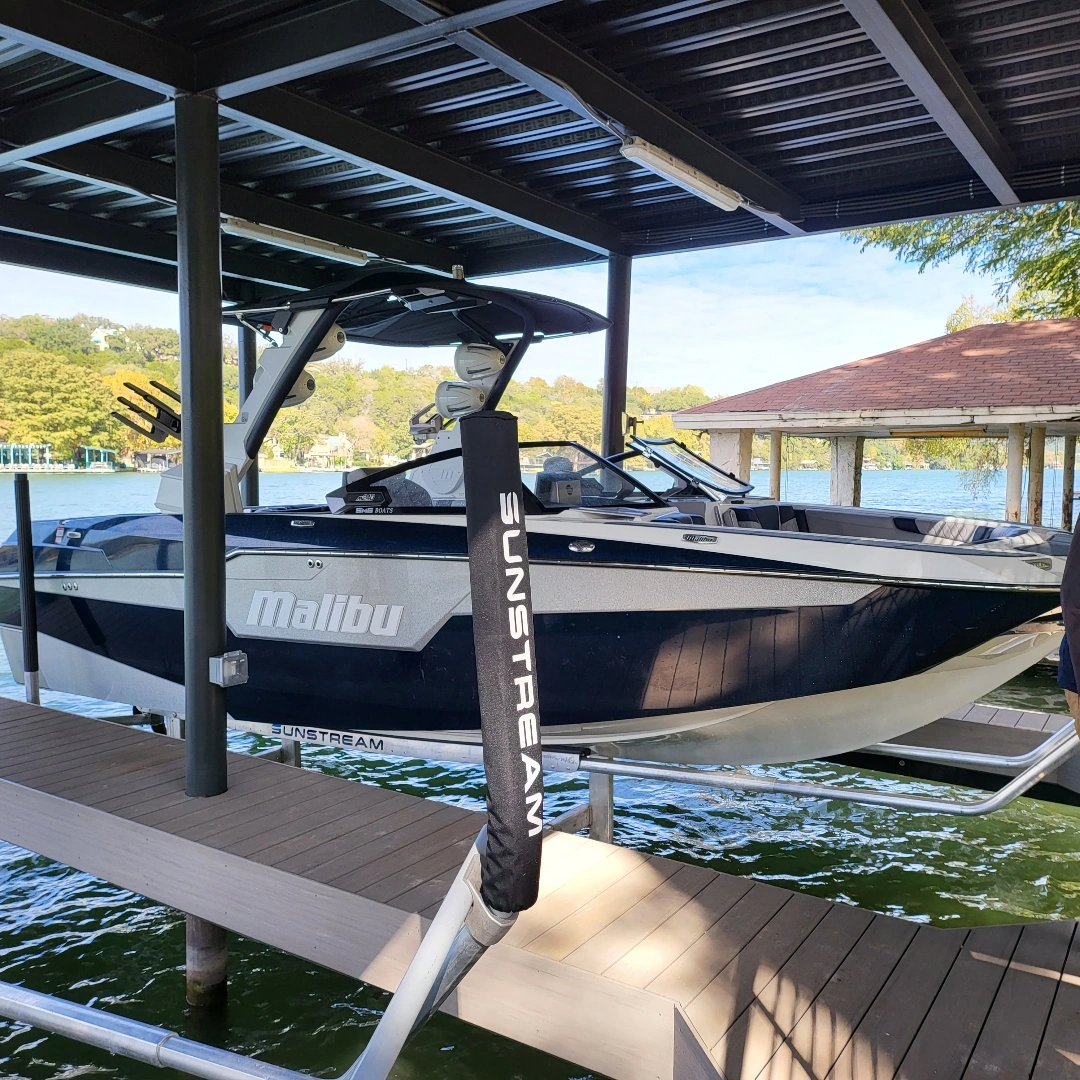
Assess site requirements and permitting
We start with the site: the dock the lift ties into, the water under it and the boat it will carry. Share the lake and property location, dock photos and any drawings or approval records you have. Together, we can work through depth, changing lake levels, dock condition, access and utilities.
If the lift is part of a new dock or a rebuild, we discuss that work together. The proposal should identify any dock changes, applicable requirements and who prepares and submits documents. Our project planning and permitting guide explains how the lake and work scope shape that path.
Select the right lift system
The right lift fits the boat, the dock and the water. We discuss cable, hydraulic and air-flotation systems in terms of your loaded boat weight, hull, slip dimensions, depth and dock structure, so the choice starts with your installation.
Include fuel, gear and other carried loads when checking capacity. Review the manufacturer's capacity, hull-support and installation requirements for the actual model. The boat lift calculator can help frame the discussion, but a final equipment choice follows a site and vessel review.
Already have a lift that needs attention? Send its make, model and symptoms before deciding to replace it. We can confirm the service scope and help you understand the next step.
Hire a professional installer
A lift is a structural installation over water. A useful conversation with an installer should leave you knowing how the system fits your boat and dock, what the bid includes and who will look after the equipment. Use these questions when you talk with us or compare proposals:
- Which lift model fits my boat and dock, and what manufacturer requirements apply?
- What equipment, installation, dock changes, utilities and access are included in the written bid?
- Who prepares drawings, handles any applications and coordinates specialist work?
- What credentials and insurance documentation are relevant to this installation?
- What commissioning, operating instructions and service arrangements are included?
Our contractor comparison guide can help you organize the questions. Bring the boat and property details so the discussion stays specific to your installation.
Understand the installation timeline
We work toward a project-specific schedule once the boat, lift and site requirements are clear. The planning conversation follows four stages:
- Consult. Review the dock, slip, boat and what you want the lift to do.
- Define the scope. Identify the equipment, dock changes, approval path and responsibilities in the proposal.
- Plan the installation. Coordinate equipment delivery, access, utilities and site work around the agreed scope.
- Agree on the handoff. Set out the commissioning, operating instructions, documentation and service arrangements included in your project.
The schedule depends on the site, the selected lift, materials and any required reviews. Lake conditions and weather can also affect work. We discuss those dependencies with you rather than promise a general day count. Tell us about your dock and boat to start the conversation.
Boat Lift Repair and Maintenance
Changes in sound or movement, worn cables, damaged bunks, leaks, corrosion or a lift that no longer holds position deserve a closer look. The right repair depends on the lift model, condition, parts and dock. A condition assessment can distinguish routine service from a larger repair or replacement.
Share photos of the lift and dock, the make and model if known, and the symptoms. We will define the inspection or repair scope, documentation and any follow-up schedule for the specific equipment. If a lift is unstable or damaged, stop using it until it can be assessed.
Plan for Changing Lake Levels
Lake Travis water levels change, and usable depth, dock access and lift operation can change with them. A site review should consider the dock's movement, anchoring, shore access, utility connections and the lift's operating limits at the property's conditions. No single lift or anchoring layout suits every cove or guarantees use at every water level.
Ask which conditions the proposed system is designed to accommodate, when adjustment may be needed and when use should pause for inspection.
Check Approvals Before Work Starts
Requirements vary by lake, property and work scope. LCRA's Highland Lakes dock guidance says qualifying residential docks do not require an LCRA dock permit, while its safety standards still apply. The City of Austin's boat-dock guidance addresses Lake Austin and distinguishes types of work and review.
Other property, shoreline, utility or local requirements may matter. Confirm the responsible authority and who prepares and submits any documents before scheduling work. Our permitting planning guide lays out the questions to ask.
Condition Assessments and Service Area
For a pre-purchase question, storm damage or a lift that is no longer working as expected, tell us whether you need the lift, its supporting dock or both assessed. Agree on the observations, photographs and report format before the visit; a condition assessment does not replace a trade inspection or insurer-specific certification unless that is explicitly part of the scope.
We serve Lake Austin, Lake Travis, Lake LBJ, Lake Marble Falls and Lake Buchanan. Send the property location, boat and lift details, photos and your goal so we can confirm site access, availability and the next step toward a scoped proposal.
Frequently asked questions
Lift Care Plan
Annual boat lift service — before the cable, seal, or anchor fails.
Cables fray, hydraulic seals weep, anchors shift after a storm. Almost none of it is sudden. Our lift care plan catches every one of those failures on a schedule, not on the weekend you wanted to launch.
Essential
1 annual service visit
Quoted after site and scope review
- Cable inspection & tensioning
- Motor service & GFCI check
- Bunk strap & carpet inspection
- Anode replacement
- Documented bunk-position check
Plus
FeaturedBi-annual + storm priority
Quoted after site and scope review
- Everything in Essential
- Hydraulic seal & pressure service
- Anchor drift verification
- Storm response priority reviewed in quote
- Repair parts coverage reviewed in quote
Aquatic Defense
Lift care + peak-season weed cuts
Quoted after site and scope review
- Everything in Plus
- Truxor hydrilla & milfoil cutting at lift bunks
- Prevents fouled cables & jammed cradles
- May–September coverage
- Mechanical only — no herbicide
Care options are planning guides. Visit frequency, covered work, access, and pricing are confirmed in a site-specific quote before any enrollment.
Open care inquiry formReady to talk through your project?
Tell us what you have in mind and where your property is located. We serve Lake Austin, Lake Travis, Lake LBJ, Lake Marble Falls, and Lake Buchanan.