
Custom Boat Dock Construction — Lake Travis, Lake Austin & Highland Lakes
The short answer
A dock should make the waterfront easier to use. ATX Lakescapes plans custom docks around your boats, shoreline and time on the water, with site-specific scope, materials, approval responsibilities and pricing.
Start with how you want to use the water: a protected slip, an easier launch, room to swim, or a comfortable place to gather. Those priorities guide the layout before finishes and roof details are selected.
ATX Lakescapes designs and builds custom docks across Lake Austin, Lake Travis, Lake LBJ, Lake Marble Falls and Lake Buchanan. New construction, a rebuild and an addition each start with a review of the property and existing conditions.
Bring shoreline photos, boat dimensions and any drawings or approval records you have. We can use those details to discuss feasibility and the next step toward a site-specific proposal.
Look a little closer
Craft lives in the connections.
Explore three visible details in a real ATX LakeScapes project.
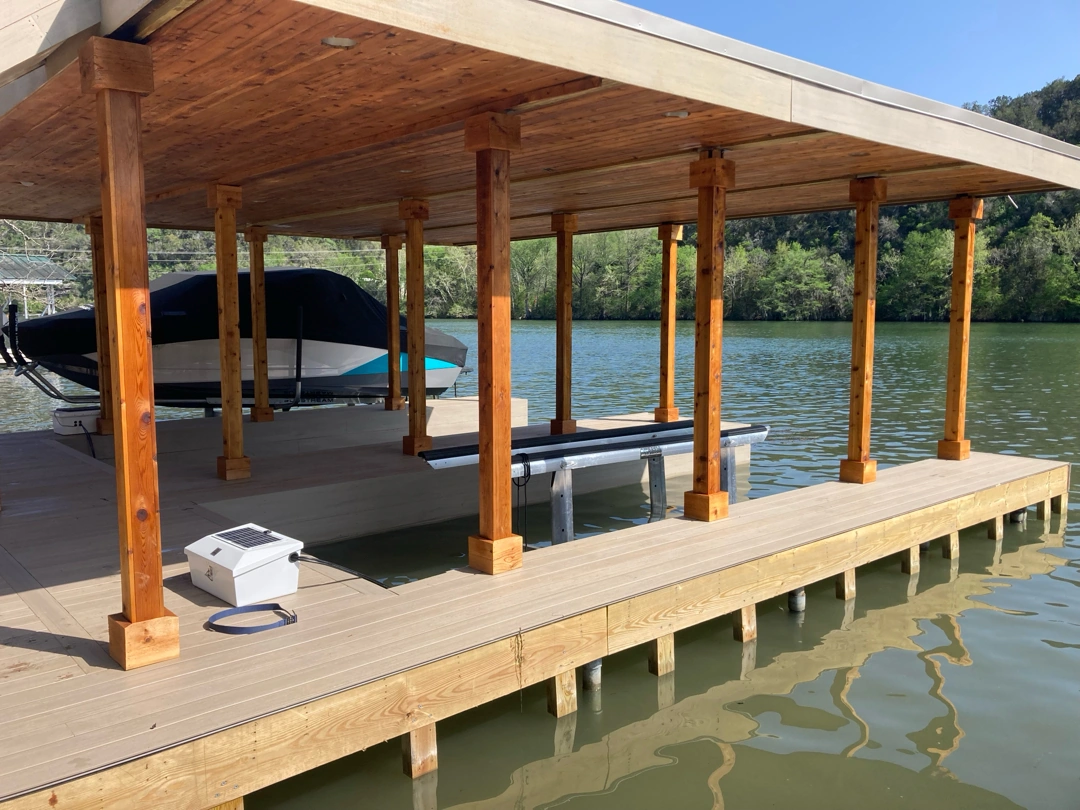
Detail 01
Roof underside
The timber-lined underside creates one continuous plane above the dock. Follow it from the near edge to the far posts.
A quiet, continuous ceiling above the water.
On the water
A closer look at our work
Project details from our work on the water.
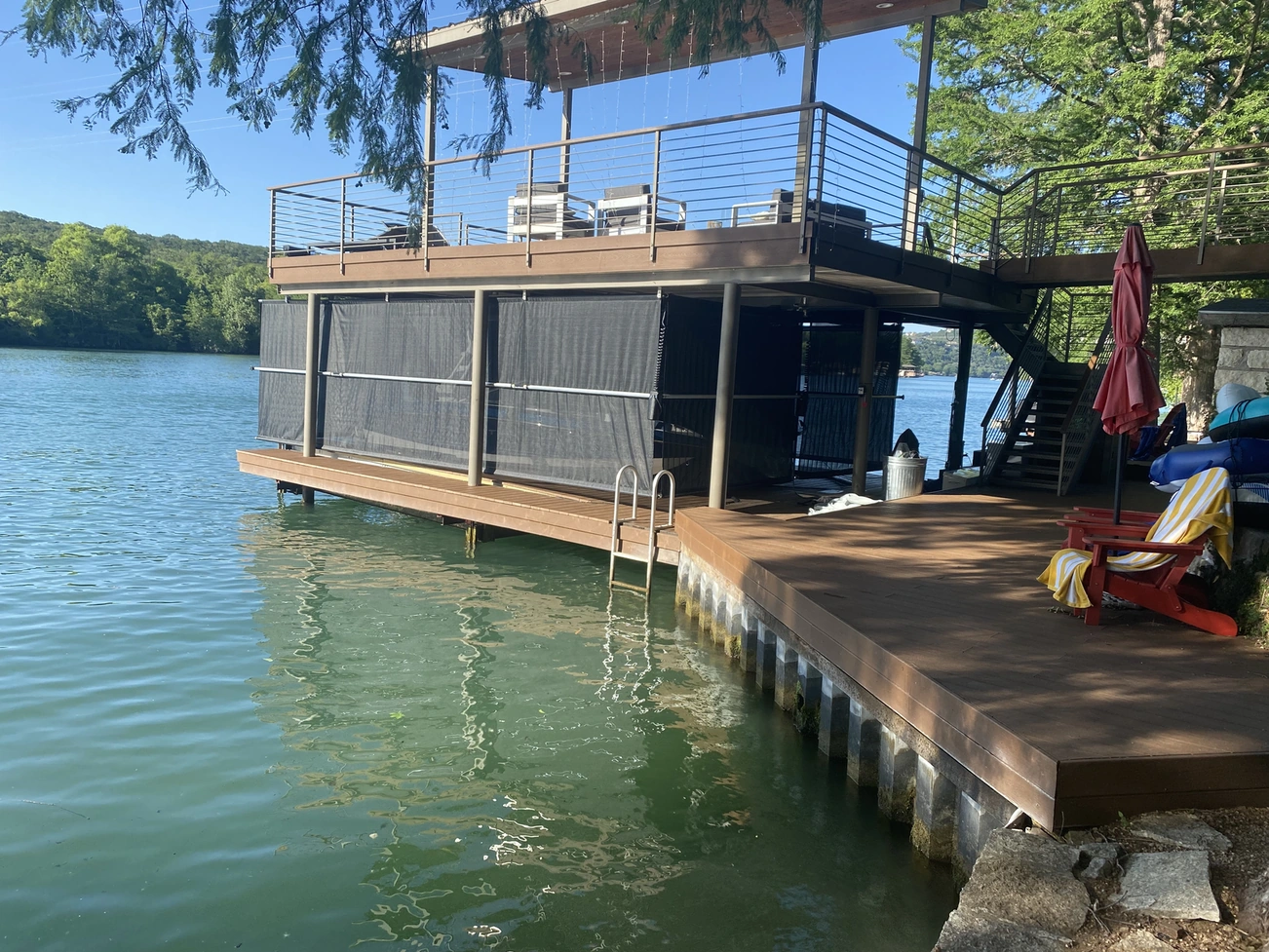
Dock access and stairs
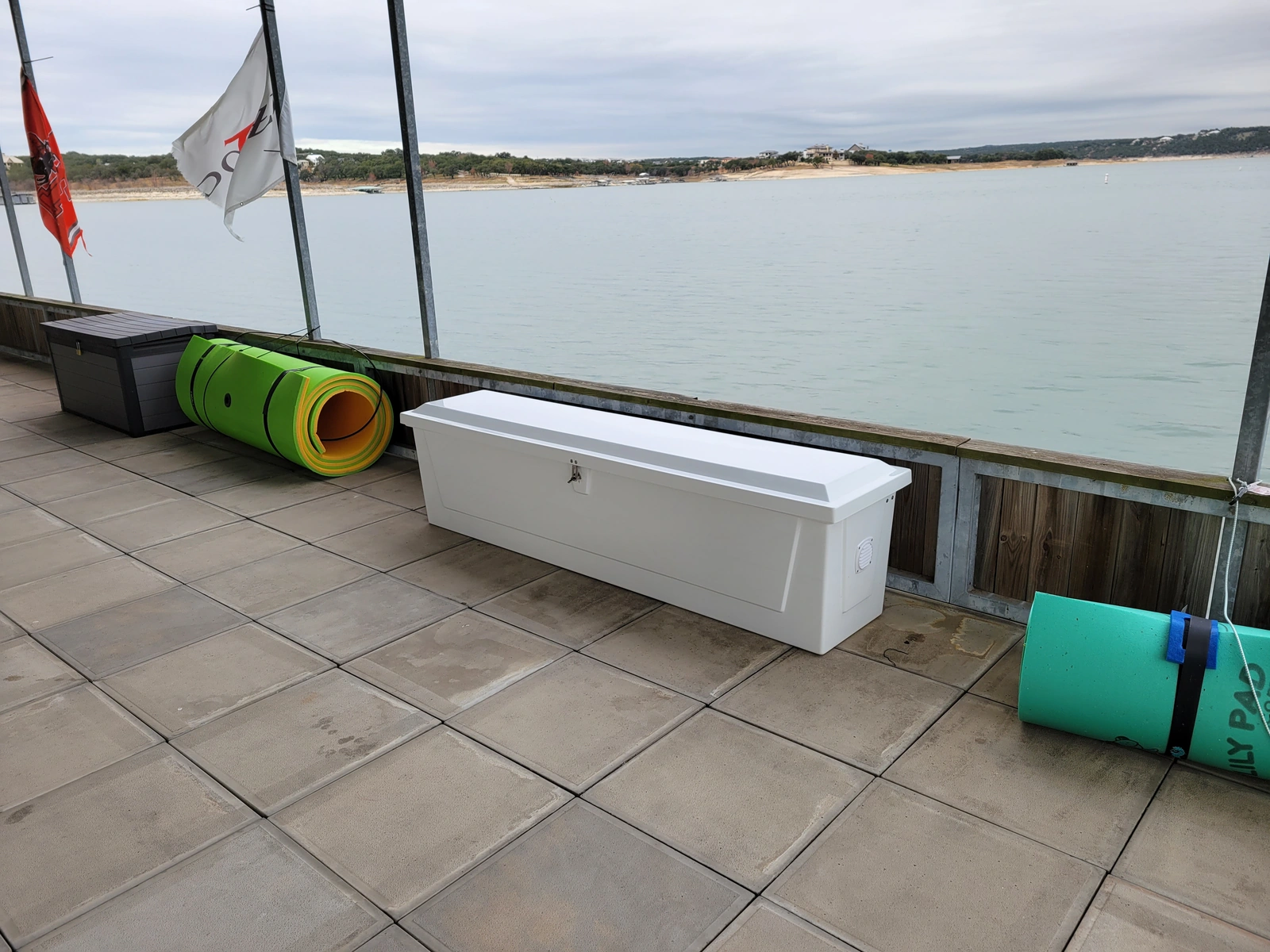
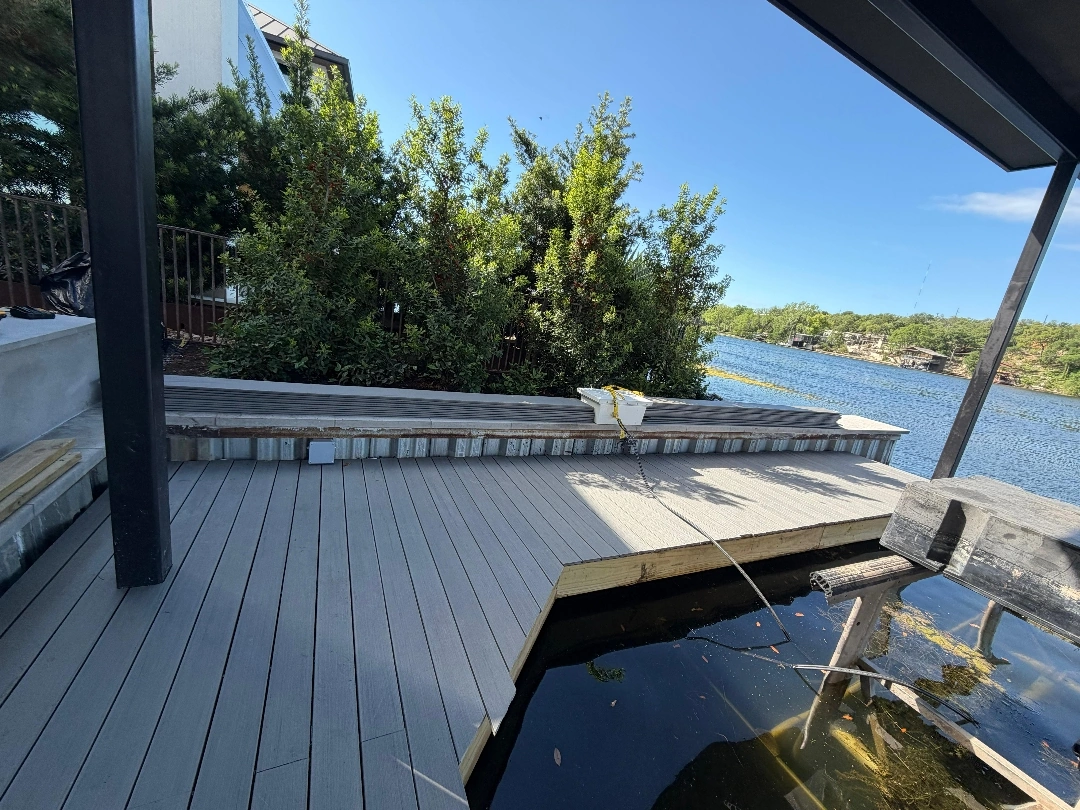
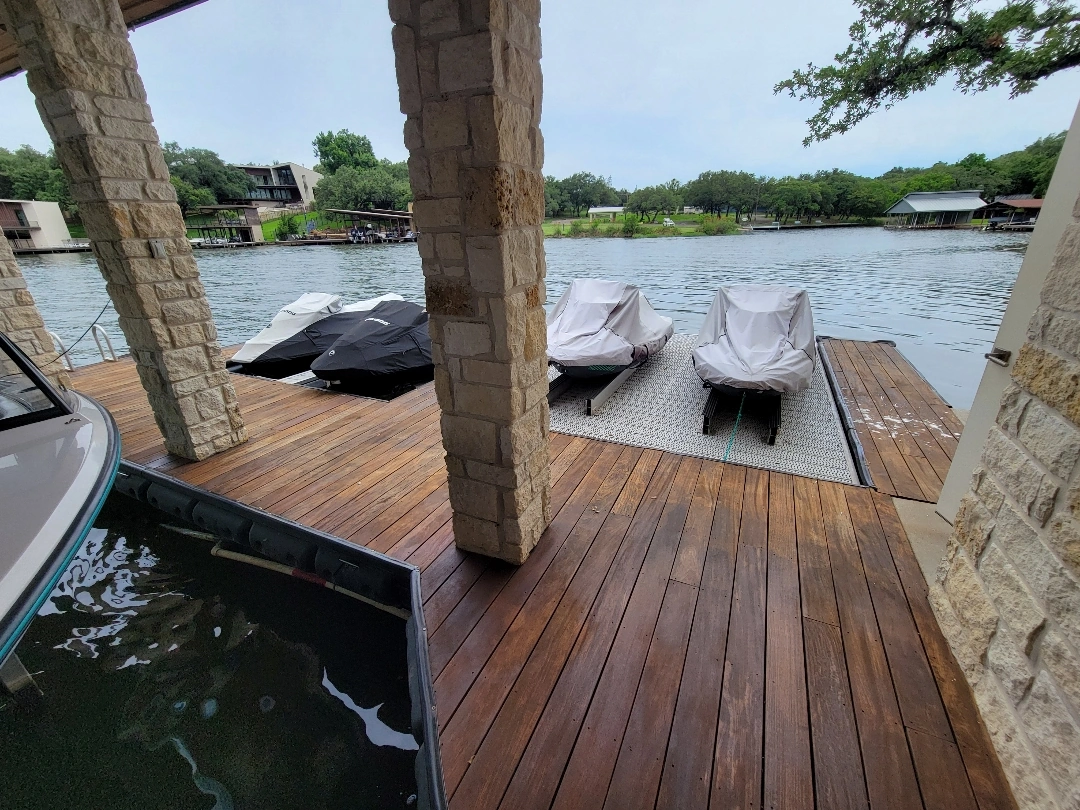
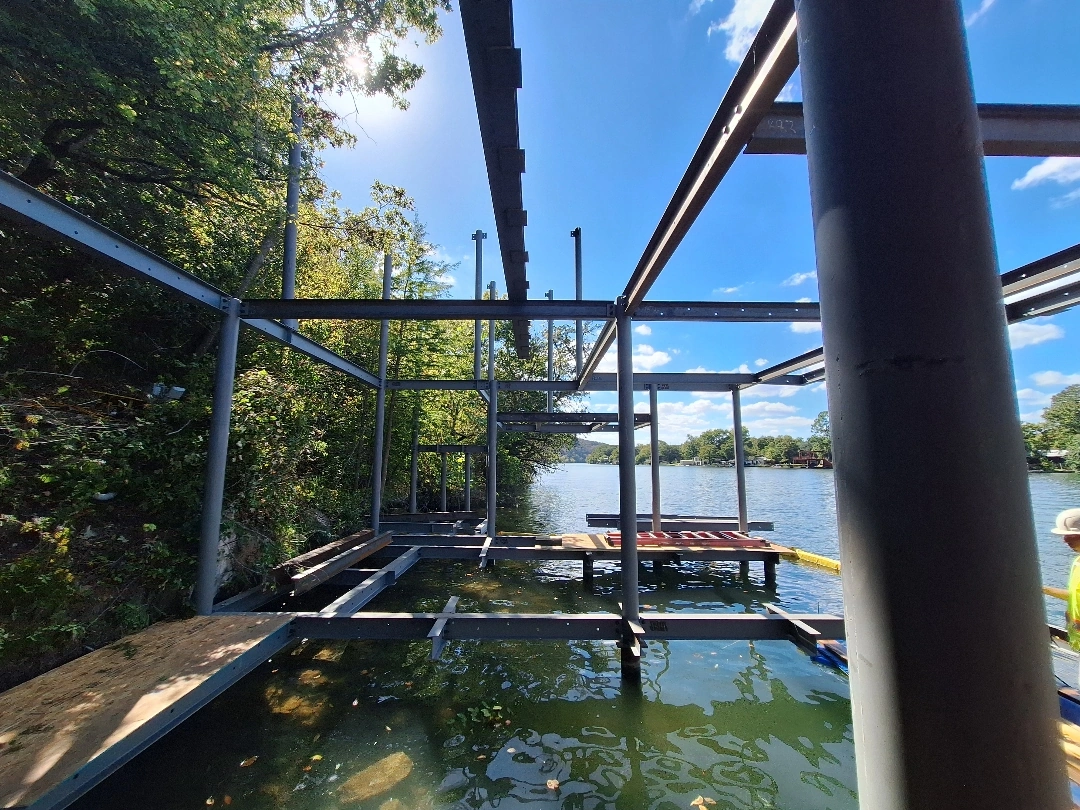
Dock construction and decking
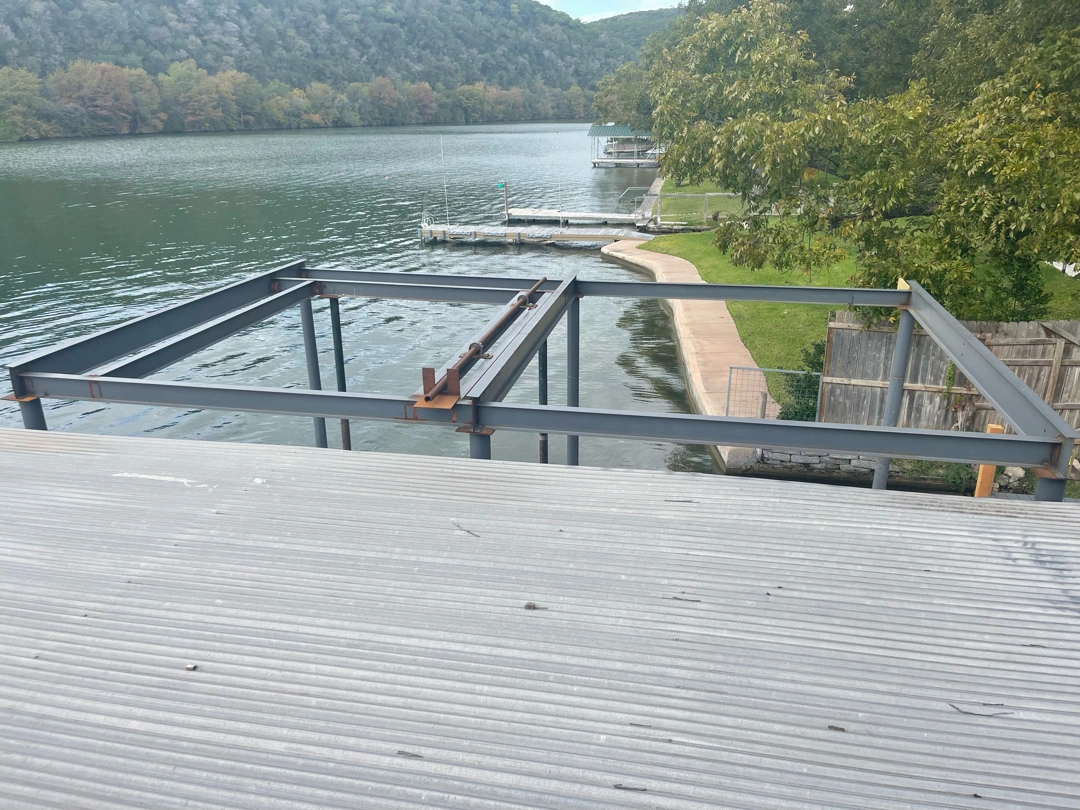
Assess site requirements and regulatory needs
Begin with the property location, shoreline photos, boat dimensions and any survey, drawings or approval records you have. Review water depth, changing water levels, shoreline access, wake exposure and the condition of an existing dock before settling on a layout.
Confirm the requirements for the lake, property and proposed work. Agree on who prepares drawings, submits any applications and responds to review questions. Our project planning and permitting guide helps organize that discussion; the lake-specific guidance below provides the official starting points.
Select a professional contractor for custom design
Look at completed dock projects with a similar setting and use. Ask the contractor to explain how access, water conditions and boat clearance influenced the layout, then request the credentials and insurance documentation relevant to the work.
- Confirm who develops the design and coordinates any engineering or qualified trade work.
- Review how approvals, equipment access and construction responsibilities appear in the written scope.
- Ask how changes are agreed, who keeps you informed and what documentation is provided at handover.
Use our contractor comparison guide to prepare questions for that conversation.
Define project scope and budget
A useful layout balances boat clearance, walking space, lift access, swimming and seating. Plan lighting, power, storage and future boat needs early so they can be coordinated with the structure.
The design must also work at the shoreline: access slope, water depth, wake exposure, anchoring or foundation conditions and installation access all affect what can be built. Engineering and approval requirements are established for the proposed scope.
Separate the features you need now from options you would like to explore. A site-specific bid should identify the dock, lift integration, materials, utilities, approvals, access, exclusions and any specialist work. Review those items together before agreeing on the scope and price.
Dock Types to Consider
Floating docks move with the water surface. Their access ramps, flotation, anchoring and utility connections need to accommodate the conditions anticipated for the site. Changing water levels can still require adjustment or limit access.
Fixed docks rely on a foundation and a chosen deck elevation. Suitability depends on the site, water conditions and applicable restrictions; it should not be assumed from nearby docks.
Covered slips add shade and shelter. Roof height, loads, materials and appearance need to be considered with the frame and any applicable property restrictions.
Multiple slips and gathering decks create space for additional boats or time outdoors. The larger footprint changes structural loads, access and the approval review. An upper deck or expanded roof needs its own design assessment.
Dock Rules Depend on the Lake and the Work
LCRA sets residential dock safety standards for Lake Travis and other Highland Lakes. Its current guidance distinguishes residential docks of 1,500 square feet or less from larger floating facilities subject to the marina ordinance. A residential dock may not require an LCRA dock permit while related shoreline work or local rules still require review.
The City of Austin manages Lake Austin dock regulations. Its process distinguishes routine work, site-plan exemptions and work requiring site-plan and building approvals. Identify the applicable path and who will prepare, submit and respond to each application before construction is scheduled.
Check the current LCRA dock guidance and City of Austin boat-dock guidance for the proposed work.
From First Conversation to Handover
1. Define the use. Share the property location, boat details, photos and priorities. Establish whether the project is a new dock, rebuild or modification.
2. Assess and design. Review access, the existing structure and site conditions. Develop the layout and identify engineering, property and approval requirements.
3. Agree the scope. Confirm materials, lift integration, utilities, exclusions, responsibilities, price and a project-specific schedule in the written proposal.
4. Prepare and build. Coordinate required approvals, materials and installation access. Review any changed conditions or scope before proceeding with affected work.
5. Handover and care. Review operation, documentation and maintenance needs. Confirm the warranties that apply to the supplied products and contracted work. Discuss follow-up care through our dock maintenance and repair service.
Materials & Engineering
Compare frame, decking, roof and flotation options as a complete system. Durability, surface temperature, traction, appearance, maintenance and manufacturer requirements all matter. Request the actual product specification and warranty instead of relying on a general material lifespan.
Lift capacity and mounting must suit the boat and dock structure. Anchoring or foundations, connections and utilities need a coordinated design for the site. Electrical work should be scoped with the qualified trade and applicable inspection requirements.
Planning for Changing Water Conditions
A design review should address changing depth, ramp access, wake and storm exposure, and how utilities move with a floating dock. Ask what conditions the design accommodates and when inspection, adjustment or restricted use may be needed.
Low water can expose parts of the shoreline while making delivery and on-water access harder. Installation planning and long-term operation both need attention; there is no single ramp length or anchoring arrangement that fits every cove.
Service Area and Your Next Step
We serve Lake Austin, Lake Travis, Lake LBJ, Lake Marble Falls and Lake Buchanan. Share your location and project scope to confirm access, scheduling and suitability. Use the Dream Dock Designer to explore a layout, or start a conversation with the project team.
Frequently asked questions
Dock & Lift Care Plan
Keep your dock on the water — not on a repair invoice.
An annual inspection-and-tune-up program for permitted Highland Lakes docks. Catch the failures that don't show up in a photo: cable wear, anchor drift, hardware corrosion, hydrilla creeping under the bunks. Bundle aquatic weed defense to stop hydrilla and milfoil before they choke your slip.
Essential
1 annual visit
Quoted after site and scope review
- Full structural & hardware inspection
- Cable, bunk & flotation check
- Electrical and GFCI verification
- Anode replacement
- Written report with photos
Plus
Featured2 visits + storm priority
Quoted after site and scope review
- Everything in Essential
- Spring + fall tune-up
- Hydraulic seal & pressure service
- Storm response priority reviewed in quote
- Spot hydrilla clearing at slip & lift bunks
Aquatic Defense
Quarterly + peak-season weed cuts
Quoted after site and scope review
- Everything in Plus
- Truxor weed cuts May–September
- Hydrilla, milfoil & cattail management
- Whole-dock-perimeter clearing
- LCRA/TPWD compliance handled
Care options are planning guides. Visit frequency, covered work, access, and pricing are confirmed in a site-specific quote before any enrollment.
Open care inquiry formYour intention
What would make the lakefront yours?
Start with the way you want to live by the water. The details can follow.
A starting conversation
Your lakefront brief
Nothing is sent. Save only when you choose.
Saved only on this device. Nothing is sent.
You can copy this brief into the project message on our consultation form. It is not transferred automatically.
Ready to talk through your project?
Tell us what you have in mind and where your property is located. We serve Lake Austin, Lake Travis, Lake LBJ, Lake Marble Falls, and Lake Buchanan.